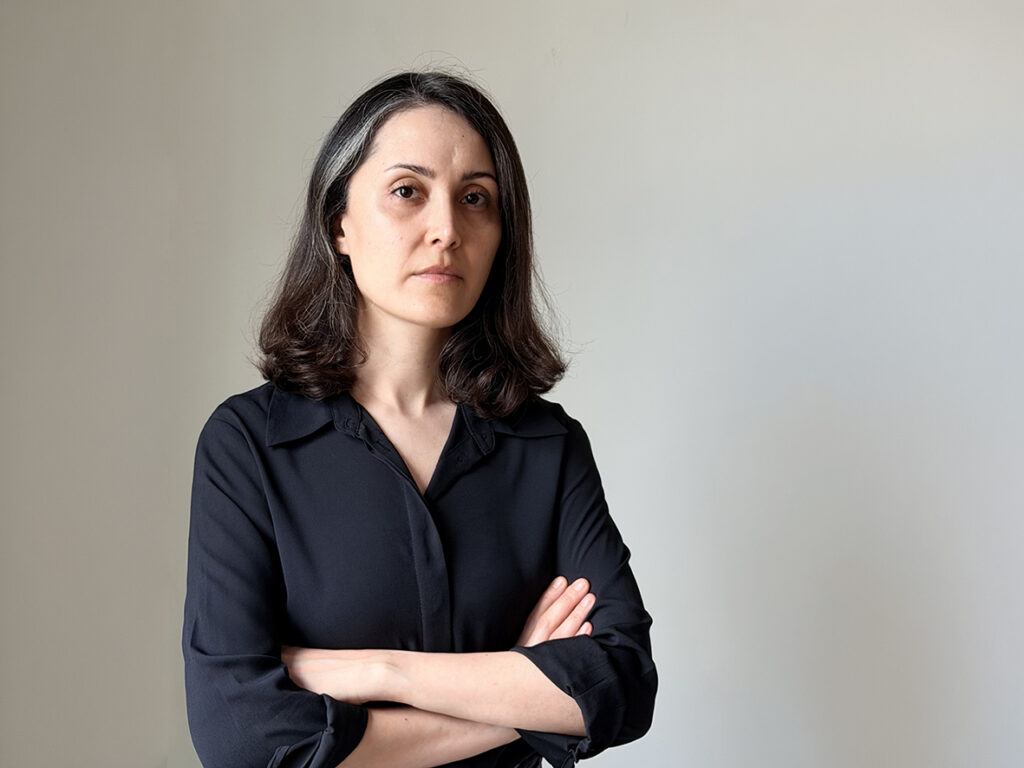
Farzaneh Rad wins Call for Print 2026
Svenska / English
Grafikens Hus’s Call for Print has concluded for this year. We are delighted to present the winner — artist Farzaneh Rad. She will create an exclusive print edition as part of ”Edition Grafikens Hus.” The edition will be produced at Grafikskolan in Stockholm and released for sale in our Fine Art Print shop this autumn. Don’t miss it!
Jury Statement
”Farzaneh Rad’s fragmented figures and dreamlike collages evoke a surrealist artistic tradition, and her expression sparked the jury’s curiosity. Something is off-kilter, and we can’t stop looking. With both humour and sharp precision, she takes the temperature of our contemporary moment — where the ”self” is in constant focus. We find ourselves naturally reflecting on the times we live in, and on whose gaze it is that guides us.
In her winning proposal, the artist wishes to work with the fragmented body — constructed through layers of identity, language, and memory — an inner landscape. Her idea also raises questions about representation: how the body is read, interpreted, and sometimes fractured by the gazes of others. The jury believes that Farzaneh Rad’s rich visual world will be further amplified through the techniques of screen printing, where colour separation, repetition, and displacement can open up exciting new possibilities.”
This year’s jury consisted of members from Grafikens Hus team: Emma Dominguez (art educator) and Nina Beckmann (museum director).
This year, the winner will work together with printer Laurens Rohlfs at Grafikskolan in Sätra, Stockholm — the only art school in the Nordic countries that focuses exclusively on printmaking and Artists’ Books.
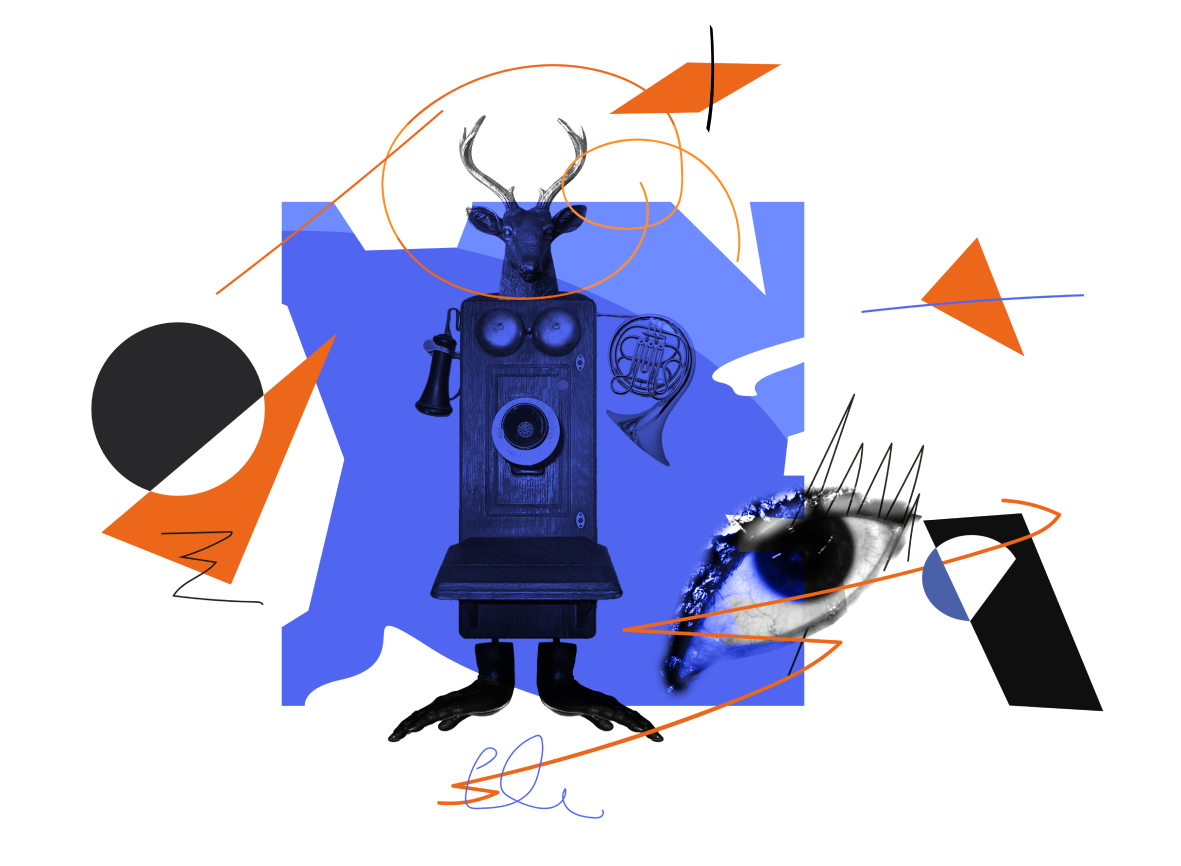
Mellan synfält / Between Fields of Vision, 2023
Collage/mixed media, 42 × 22 cm
© Farzaneh Rad
Biography
Farzaneh Rad is a visual artist, graphic designer, and art historian based in Stockholm. She has studied art, printmaking, and art history. Her artistic practice moves between photography, painting, printmaking, and collage, exploring questions of identity, language, memory, and the invisible inner landscape.
She works in a process-oriented and experimental manner. Layering is her way of approaching what cannot be captured in a single expression, and of examining how identity manifests through memory, bodily traces, and inner images. The fragment is a recurring method for gathering, breaking down, and reshaping visual material, allowing what was previously invisible to emerge. Her work has been shown in Sweden and internationally.
Photo credits: Narav Bazaz